
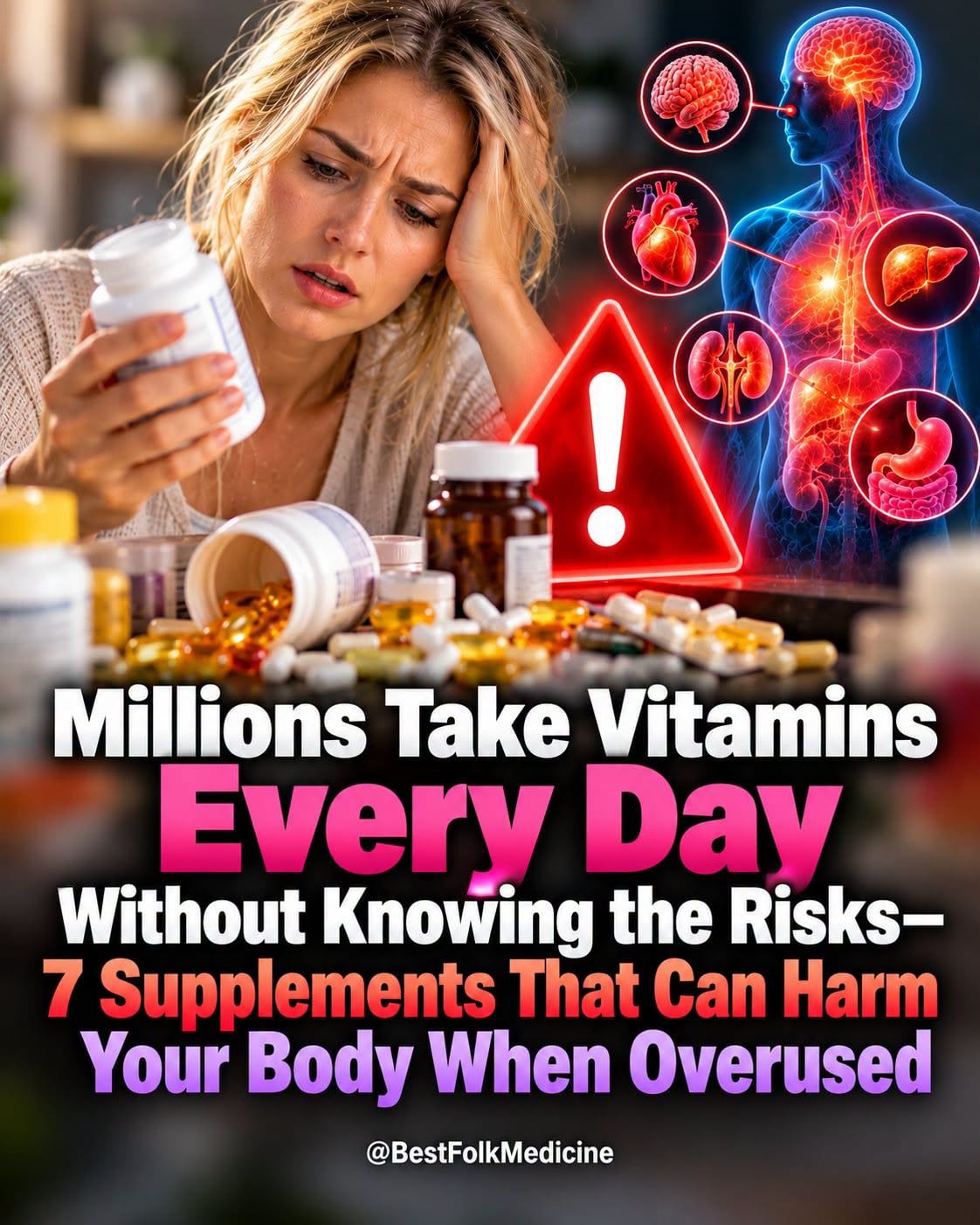
combines selenium supplements with multivitamins and selenium-rich foods such as Brazil nuts.
The European Food Safety Authority established an upper intake level of 255 micrograms per day for adults.
The important point is that a nutrient required in tiny amounts does not become more beneficial simply because the dose is increased.
7. Vitamin E: High Doses May Increase Bleeding Risk
Vitamin E is an antioxidant that helps protect cells from oxidative damage.
It is sometimes promoted for skin health, cardiovascular protection, and healthy aging.
However, high-dose vitamin E supplementation can interfere with normal blood clotting.
Clinical research has raised concerns

Comments